Tragic Death of Woman Who Testified Against Her Father Over Mafia Murder of Her Mother
- by Sarah, Rome, HSN
- about 3 hours ago
- 137 views
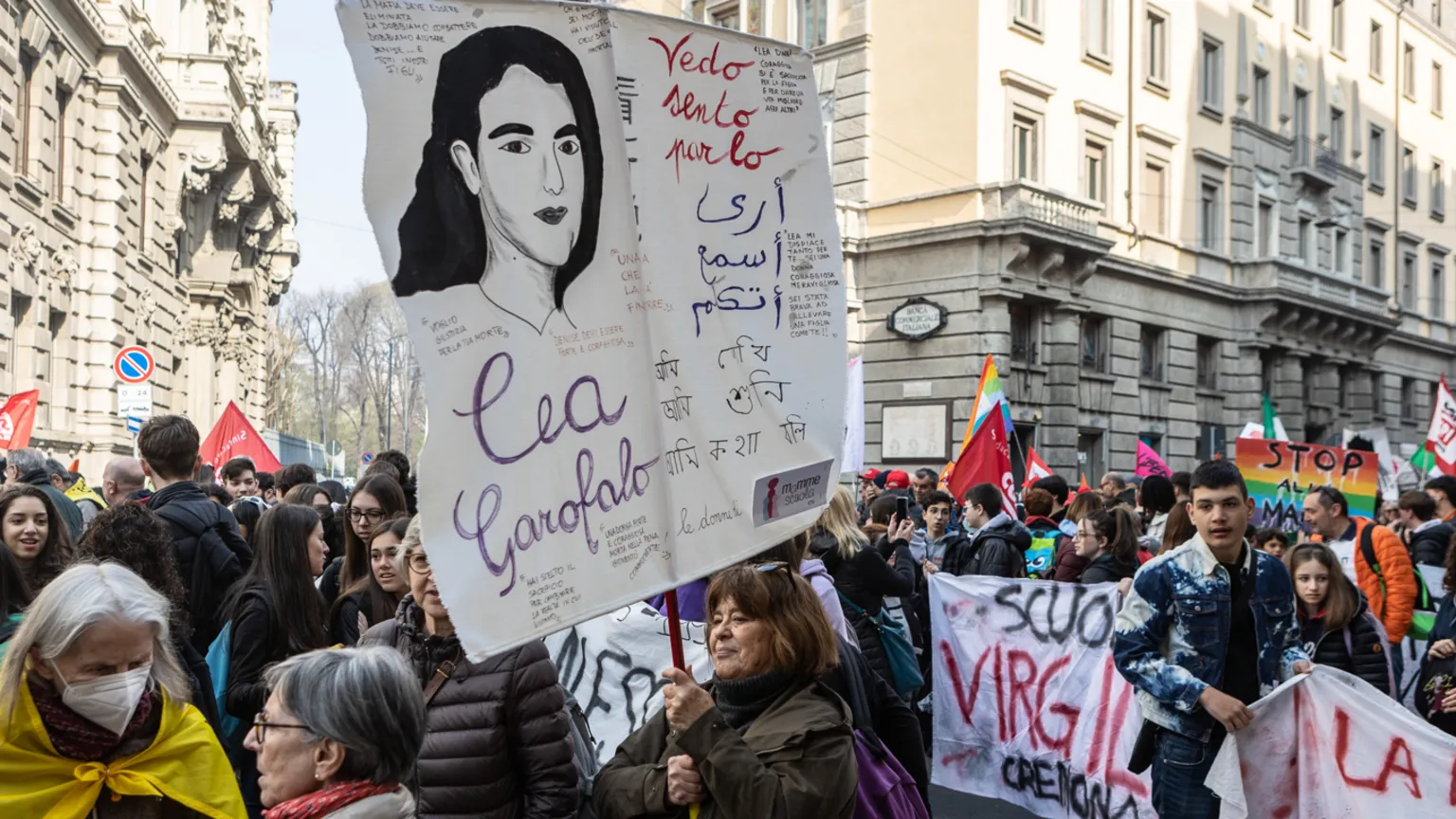
She found the courage to expose her father’s deadly secret. Years later, the daughter who stood for justice was found fighting a battle of her own.
Denise Cosco, the daughter of an Italian mafia murder victim who bravely testified against her own father, is believed to have taken her own life at the age of 35.
Cosco was found critically injured on Sunday and later died in a hospital in Rome. Her death has reopened painful questions about the lifelong trauma faced by those who escape organised crime but remain bound to it by blood.
Her mother, Lea Garofalo, was murdered in 2009 after becoming a state witness against the powerful ’Ndrangheta mafia network in southern Italy. Her courage eventually made her a symbol of resistance to organised crime.
Cosco followed in her mother’s footsteps, giving evidence against her father, Carlo Cosco, and others involved in Garofalo’s killing.
At his trial, she described herself as a “proud witness for justice”. Speaking from behind a screen, she explained that she had chosen to testify because she wanted the “inner freedom to start over” with her life.
It was a decision that came at an enormous personal cost.
For years, Cosco lived under state protection with a new name and identity, just as her mother had done before her. Yet the past remained impossible to escape completely.
In recent years, she reportedly reconnected with her father, who was serving a life sentence in prison. Those close to her said that despite the horror of what had happened, she felt a deep void in her life and struggled with mental health problems and addiction.
Francesca Rispoli, co-president of the anti-mafia organisation Libera, said Cosco’s story demonstrated that leaving organised crime does not necessarily mean escaping its influence.
“The mafia, it's not just something physical. You can leave. You can change your name,” she told the BBC. “But there is still a tie, a family tie, that stays… deep inside and is impossible to overcome.”
Cosco had refused to accept her father's claim that Garofalo had abandoned her to begin a new life in Australia.
The truth was far darker.
Garofalo had been lured to a meeting by Cosco, who was involved in the plot to kill her. She was strangled, her body dismembered and later burned. Years later, a statement from one of the killers helped investigators recover fragments of bone and a necklace belonging to Garofalo, which Cosco identified.
At her mother's public funeral in 2013, Cosco spoke of Garofalo's courage and her decision to put herself “on the line” in the pursuit of justice.
By then, her father and three accomplices had been sentenced to life in prison.
Enza Rando, a senator and anti-mafia lawyer who represented Cosco during the trial, described her death as “a profound wound for the entire country”.
She said the tragedy showed that the mafia does not only kill its victims, but can leave survivors carrying psychological scars that last a lifetime.
Rispoli said Cosco's death should prompt a rethink of the support given to people who break away from criminal organisations, arguing that protection cannot simply end after a few years.
“Maybe this is a sign that those trying to lead another life need more support. Not just for one year – maybe their whole life,” she said.
The ’Ndrangheta is particularly difficult to escape because of its deeply rooted family structures, meaning that the ties binding people to the organisation can be emotional as well as criminal.
Cosco died at 35 — the same age her mother was when she was murdered.
Italian prosecutors have opened an investigation to establish whether anyone may have encouraged or incited her to take her own life. Her phone has also been seized for examination.
Friends and supporters were expected to gather in Milan on Friday evening to remember Cosco near the place where her mother was abducted.
For Luigi Ciotti, president of Libera, Cosco's life was defined by a painful struggle between extraordinary courage and profound suffering.
“Denise's entire life revolved between the two extremes of courage and suffering,” he wrote.
“Today, something in that fragile equilibrium was broken forever.”






0 Comment(s)